Since 1945, Shelburne Craft School has been offering hands-on education in artisanal crafts—helping individuals experience the joys of making, while cultivating confidence, character, and community.
1938
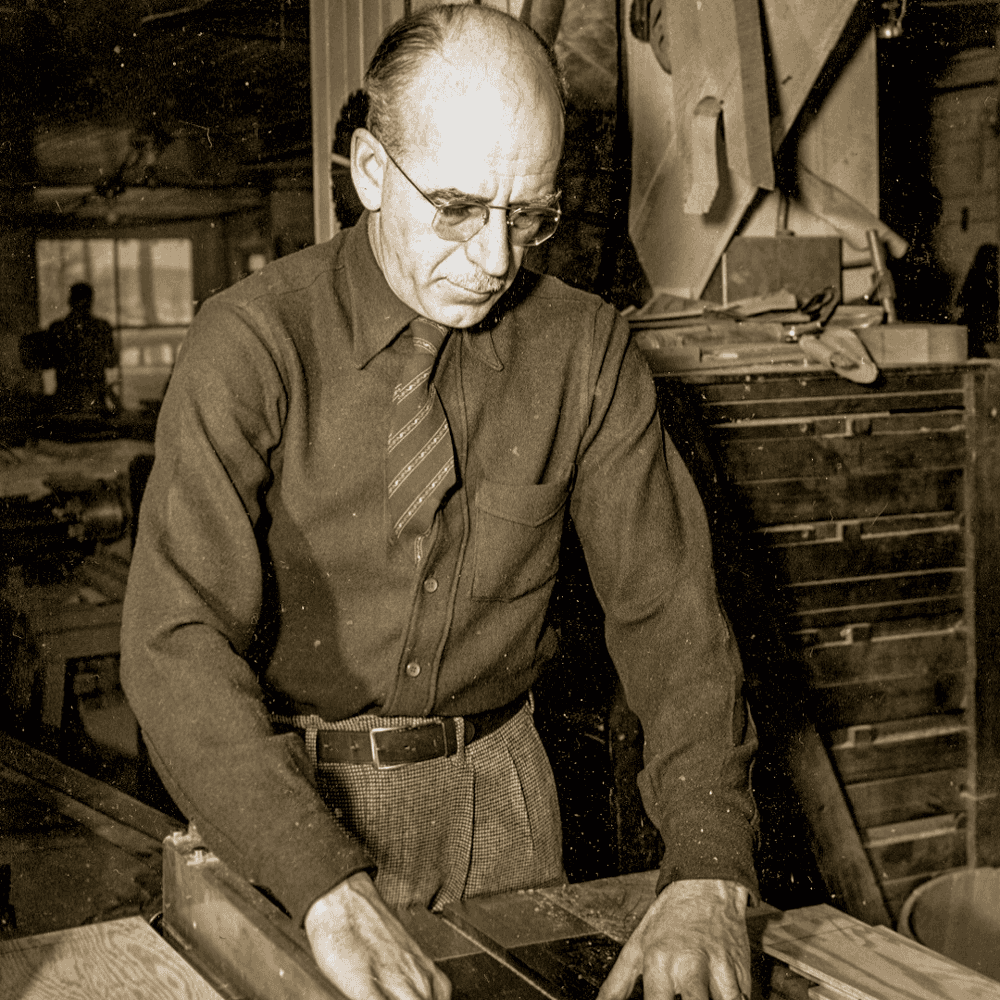
Reverend Lynwood at work
Reverend J. Lynwood Smith, a local woodworker and the rector of Shelburne’s Trinity Episcopal Church, invites a small group of boys from the Village School to woodworking classes on Saturday mornings in his well-equipped workshop in the basement of the Church Rectory. Lynwood (known as “Lyn”), wants the boys to learn the fundamentals of woodworking and the joys of creating “articles both useful and pleasing to the eye,” believing that craft, whether as a vocation or an avocation, is an essential part of culture.
1938
Reverend Lynwood at work
Reverend J. Lynwood Smith, a local woodworker and the rector of Shelburne’s Trinity Episcopal Church, invites a small group of boys from the Village School to woodworking classes on Saturday mornings in his well-equipped workshop in the basement of the Church Rectory. Lynwood (known as “Lyn”), wants the boys to learn the fundamentals of woodworking and the joys of creating “articles both useful and pleasing to the eye,” believing that craft, whether as a vocation or an avocation, is an essential part of culture.
1938
Reverend Lynwood at work
Reverend J. Lynwood Smith, a local woodworker and the rector of Shelburne’s Trinity Episcopal Church, invites a small group of boys from the Village School to woodworking classes on Saturday mornings in his well-equipped workshop in the basement of the Church Rectory. Lynwood (known as “Lyn”), wants the boys to learn the fundamentals of woodworking and the joys of creating “articles both useful and pleasing to the eye,” believing that craft, whether as a vocation or an avocation, is an essential part of culture.
1939
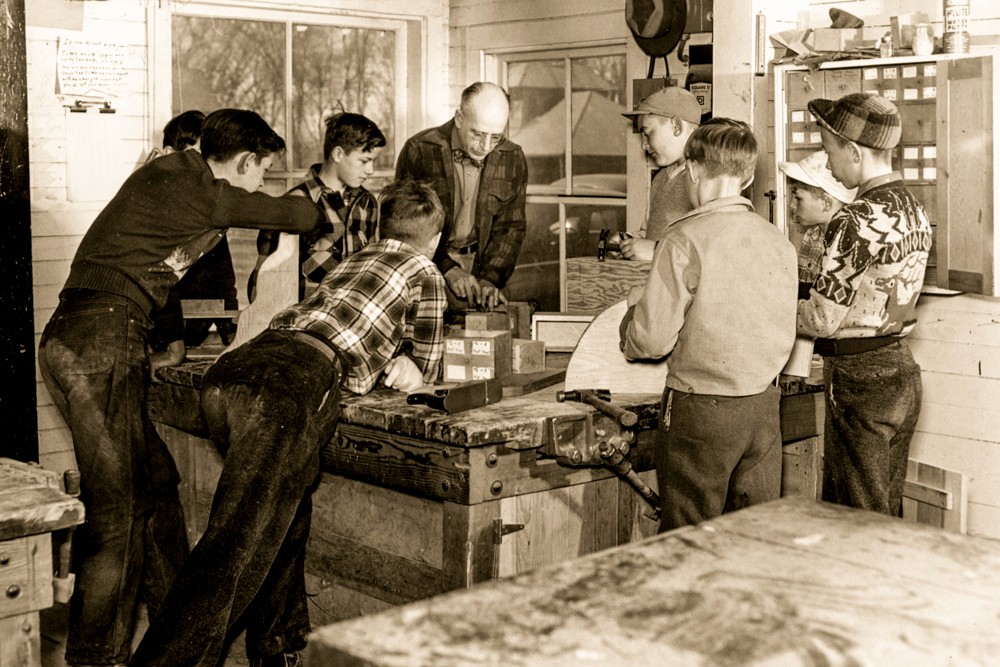
Lyn Smith teaching local boys
Lyn receives approval and $200 of funding from the State of Vermont to move his woodworking classes to a corner of the boys’ locker room at Shelburne Village School.
1939
Lyn Smith teaching local boys
Lyn receives approval and $200 of funding from the State of Vermont to move his woodworking classes to a corner of the boys’ locker room at Shelburne Village School.
1939
Lyn Smith teaching local boys
Lyn receives approval and $200 of funding from the State of Vermont to move his woodworking classes to a corner of the boys’ locker room at Shelburne Village School.
1941
A room is partitioned in the basement of the Village School, and hand tools are purchased through donations by Derrick Webb, Seward Webb, and Dunbar Bostwick, allowing Lyn to continue his work.
1941
A room is partitioned in the basement of the Village School, and hand tools are purchased through donations by Derrick Webb, Seward Webb, and Dunbar Bostwick, allowing Lyn to continue his work.
1941
A room is partitioned in the basement of the Village School, and hand tools are purchased through donations by Derrick Webb, Seward Webb, and Dunbar Bostwick, allowing Lyn to continue his work.
1943
Harry Webb and Sam Webb, Sr., sons of J. Watson and Electra Webb, donate funds to purchase a new lathe with an electric motor, meeting the Vermont Department of Education’s requirements for a regular shop course.
1943
Harry Webb and Sam Webb, Sr., sons of J. Watson and Electra Webb, donate funds to purchase a new lathe with an electric motor, meeting the Vermont Department of Education’s requirements for a regular shop course.
1943
Harry Webb and Sam Webb, Sr., sons of J. Watson and Electra Webb, donate funds to purchase a new lathe with an electric motor, meeting the Vermont Department of Education’s requirements for a regular shop course.
1944
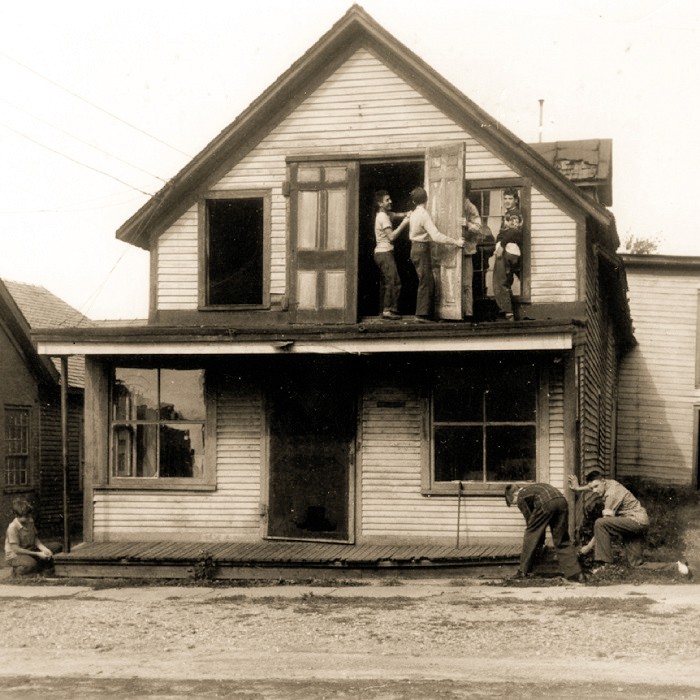
Local boys repairing the Harness Shop
The program’s growing popularity inspires Lyn to seek additional space. An agreement with Henry W. Tracy II gives him permission to use an old red building on Harbor Road, later purchased for $1. Initially a harness shop adjacent to the old blacksmith shop (which was moved to Shelburne Museum in 1957), the building once housed a wagon paint shop upstairs, with a livery stable behind it. From around 1900 to the mid-1930s, the building was used as a meat market, with an ice house at the rear. Unoccupied for years, the building is badly in need of repair. Community members and local boys volunteer to restore it.
1944
Local boys repairing the Harness Shop
The program’s growing popularity inspires Lyn to seek additional space. An agreement with Henry W. Tracy II gives him permission to use an old red building on Harbor Road, later purchased for $1. Initially a harness shop adjacent to the old blacksmith shop (which was moved to Shelburne Museum in 1957), the building once housed a wagon paint shop upstairs, with a livery stable behind it. From around 1900 to the mid-1930s, the building was used as a meat market, with an ice house at the rear. Unoccupied for years, the building is badly in need of repair. Community members and local boys volunteer to restore it.
1944
Local boys repairing the Harness Shop
The program’s growing popularity inspires Lyn to seek additional space. An agreement with Henry W. Tracy II gives him permission to use an old red building on Harbor Road, later purchased for $1. Initially a harness shop adjacent to the old blacksmith shop (which was moved to Shelburne Museum in 1957), the building once housed a wagon paint shop upstairs, with a livery stable behind it. From around 1900 to the mid-1930s, the building was used as a meat market, with an ice house at the rear. Unoccupied for years, the building is badly in need of repair. Community members and local boys volunteer to restore it.
1945
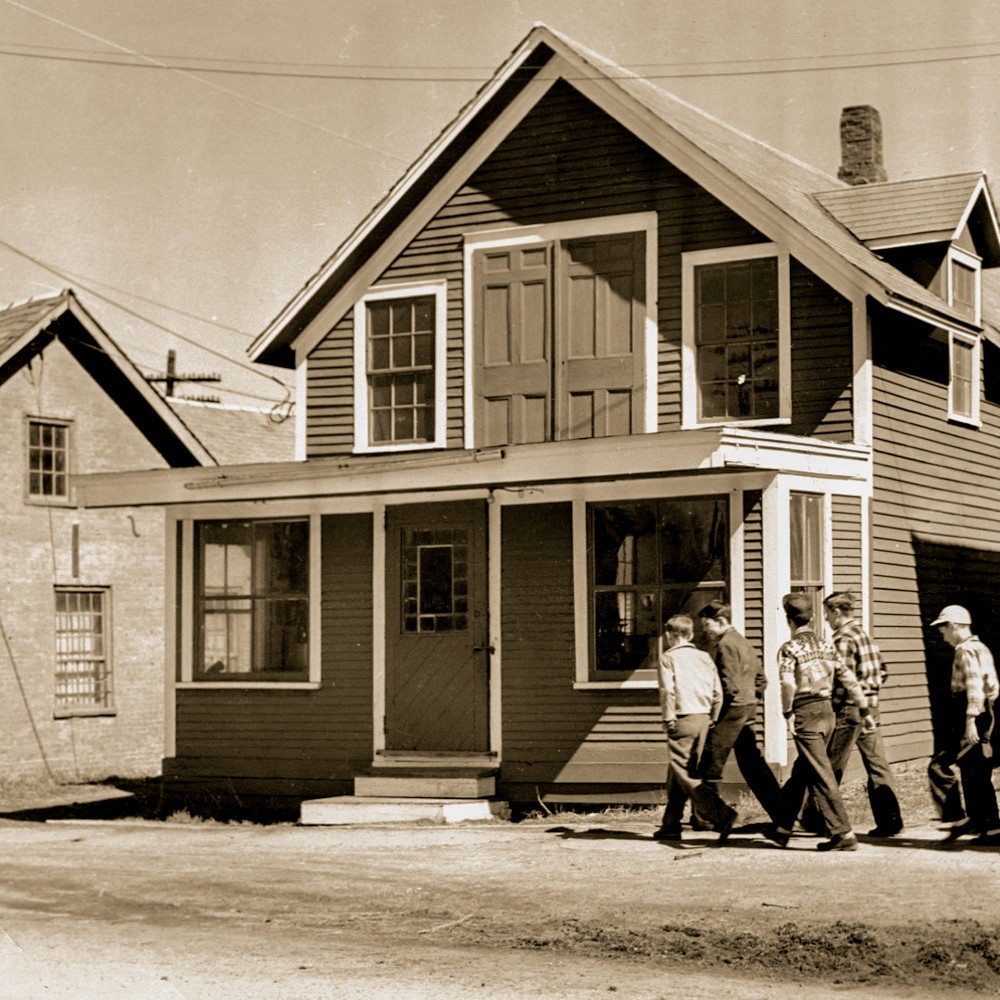
The renovated Harness Shop
With its newly renovated building in the old Harness Shop on Harbor Road, Shelburne Craft School is incorporated as a non-profit organization, dedicated to providing a place for artisanal crafters to work, learn, and teach.
1945
The renovated Harness Shop
With its newly renovated building in the old Harness Shop on Harbor Road, Shelburne Craft School is incorporated as a non-profit organization, dedicated to providing a place for artisanal crafters to work, learn, and teach.
1945
The renovated Harness Shop
With its newly renovated building in the old Harness Shop on Harbor Road, Shelburne Craft School is incorporated as a non-profit organization, dedicated to providing a place for artisanal crafters to work, learn, and teach.
1947
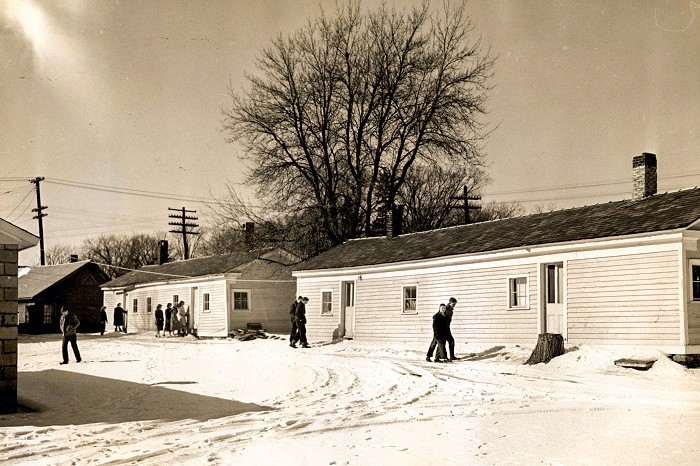
Two old railroad bunkhouses
An anonymous gift of $2,500 allows Shelburne Craft School to purchase land on Harbor Road from Henry W. and Charlotte M. Tracy. The land includes two yellow wooden buildings (circa 1849), initially used as dormitories for workers on the Rutland Railroad, then converted into bowling alleys, and later used to house two local families.
1947
Two old railroad bunkhouses
An anonymous gift of $2,500 allows Shelburne Craft School to purchase land on Harbor Road from Henry W. and Charlotte M. Tracy. The land includes two yellow wooden buildings (circa 1849), initially used as dormitories for workers on the Rutland Railroad, then converted into bowling alleys, and later used to house two local families.
1947
Two old railroad bunkhouses
An anonymous gift of $2,500 allows Shelburne Craft School to purchase land on Harbor Road from Henry W. and Charlotte M. Tracy. The land includes two yellow wooden buildings (circa 1849), initially used as dormitories for workers on the Rutland Railroad, then converted into bowling alleys, and later used to house two local families.
1948
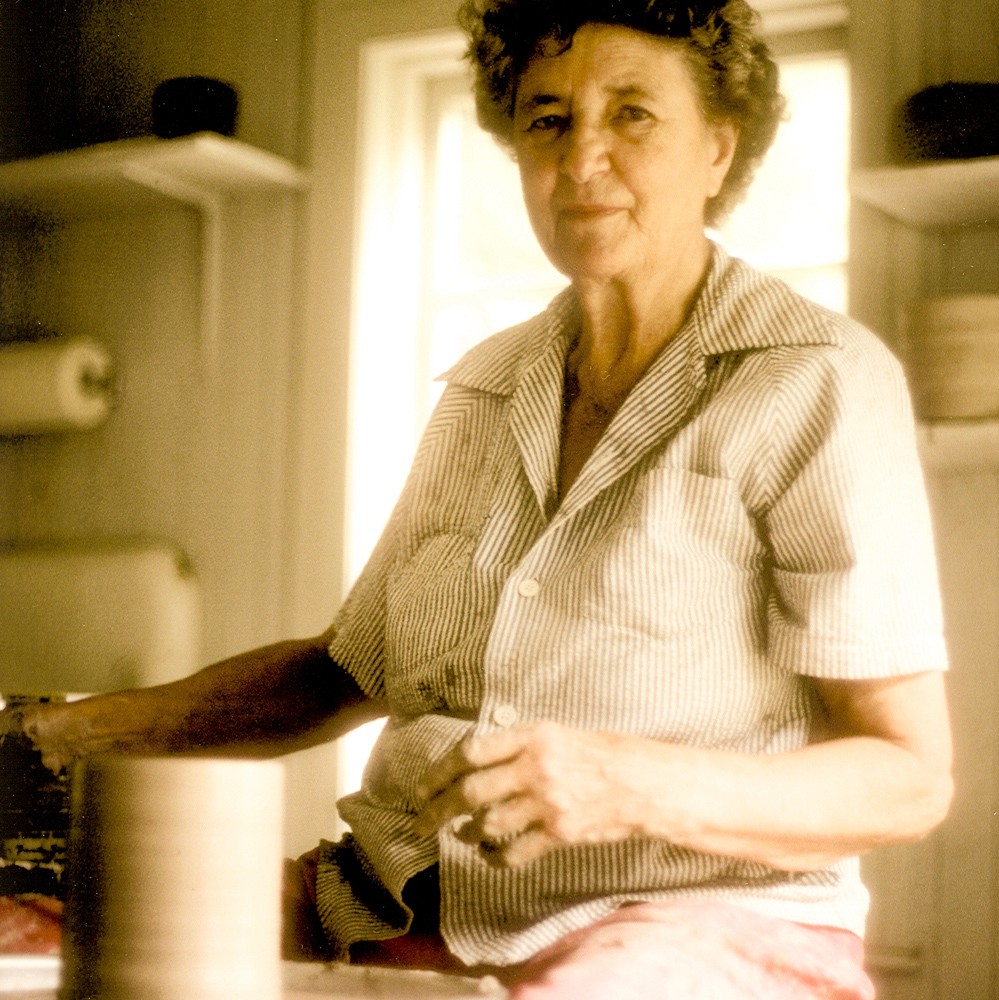
Aileen Osborn Webb at the wheel
A gift from Aileen Osborn Webb, founder of the American Craft Council (and a major proponent of the American Craft movement in the first part of the twentieth century), allows Shelburne Craft School to establish a pottery studio and a kiln. Aileen Webb, a potter in her own right, brings graduates from the School for American Crafts (a school she founded at Rochester Institute of Technology) to Shelburne Craft School to teach.
1948
Aileen Osborn Webb at the wheel
A gift from Aileen Osborn Webb, founder of the American Craft Council (and a major proponent of the American Craft movement in the first part of the twentieth century), allows Shelburne Craft School to establish a pottery studio and a kiln. Aileen Webb, a potter in her own right, brings graduates from the School for American Crafts (a school she founded at Rochester Institute of Technology) to Shelburne Craft School to teach.
1948
Aileen Osborn Webb at the wheel
A gift from Aileen Osborn Webb, founder of the American Craft Council (and a major proponent of the American Craft movement in the first part of the twentieth century), allows Shelburne Craft School to establish a pottery studio and a kiln. Aileen Webb, a potter in her own right, brings graduates from the School for American Crafts (a school she founded at Rochester Institute of Technology) to Shelburne Craft School to teach.
1949
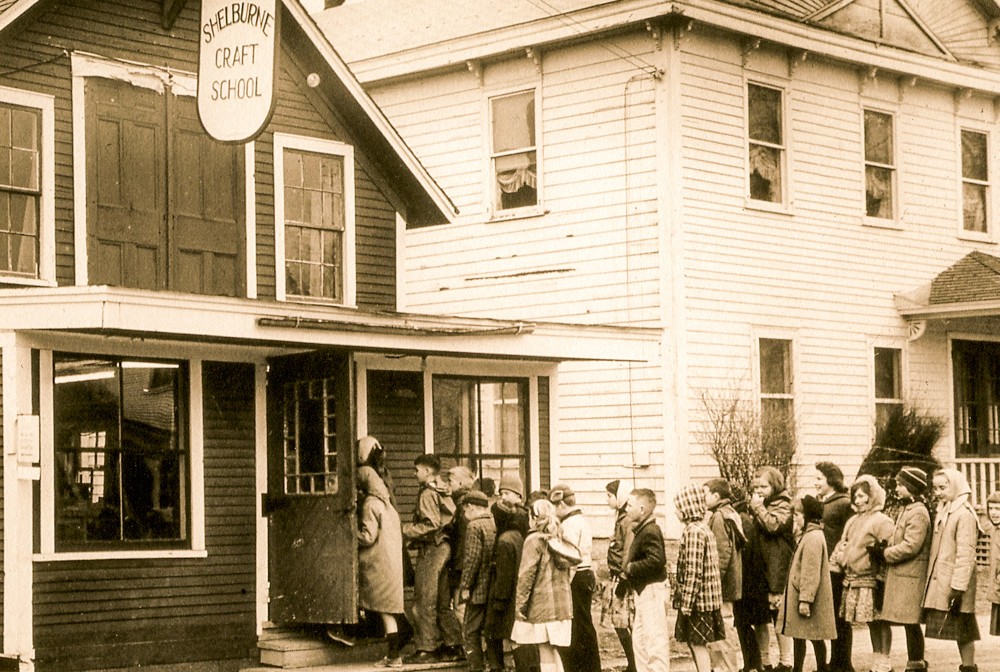
Students arriving for class
Shelburne Craft School purchases a house on the southern side of Harbor Road, creating three apartments where resident crafters can live with their families. John Lance (known as Jack) is recruited by Aileen Webb to teach woodworking. Frank Mann is recruited to teach pottery. Doris Holzinger Moss is recruited to teach weaving.
1949
Students arriving for class
Shelburne Craft School purchases a house on the southern side of Harbor Road, creating three apartments where resident crafters can live with their families. John Lance (known as Jack) is recruited by Aileen Webb to teach woodworking. Frank Mann is recruited to teach pottery. Doris Holzinger Moss is recruited to teach weaving.
1949
Students arriving for class
Shelburne Craft School purchases a house on the southern side of Harbor Road, creating three apartments where resident crafters can live with their families. John Lance (known as Jack) is recruited by Aileen Webb to teach woodworking. Frank Mann is recruited to teach pottery. Doris Holzinger Moss is recruited to teach weaving.
1950
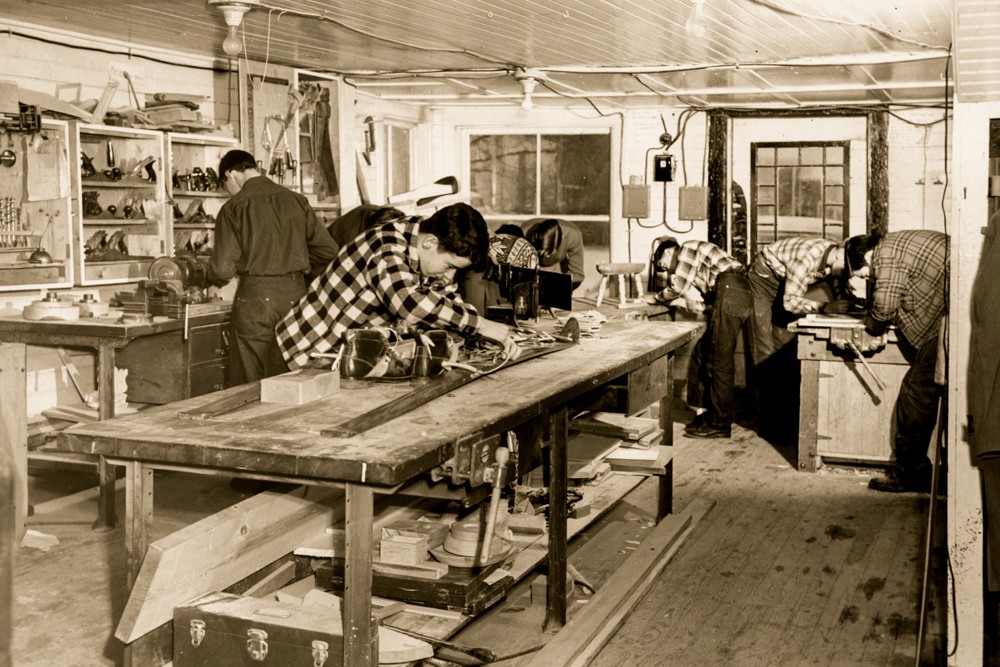
Students at work
Alongside Aileen Webb’s contributions, annual membership fees help to sustain operations. Children pay $1/year, while adults pay $5/year, plus a fee of ten cents per hour for use of the studios.
1950
Students at work
Alongside Aileen Webb’s contributions, annual membership fees help to sustain operations. Children pay $1/year, while adults pay $5/year, plus a fee of ten cents per hour for use of the studios.
1950
Students at work
Alongside Aileen Webb’s contributions, annual membership fees help to sustain operations. Children pay $1/year, while adults pay $5/year, plus a fee of ten cents per hour for use of the studios.
1951
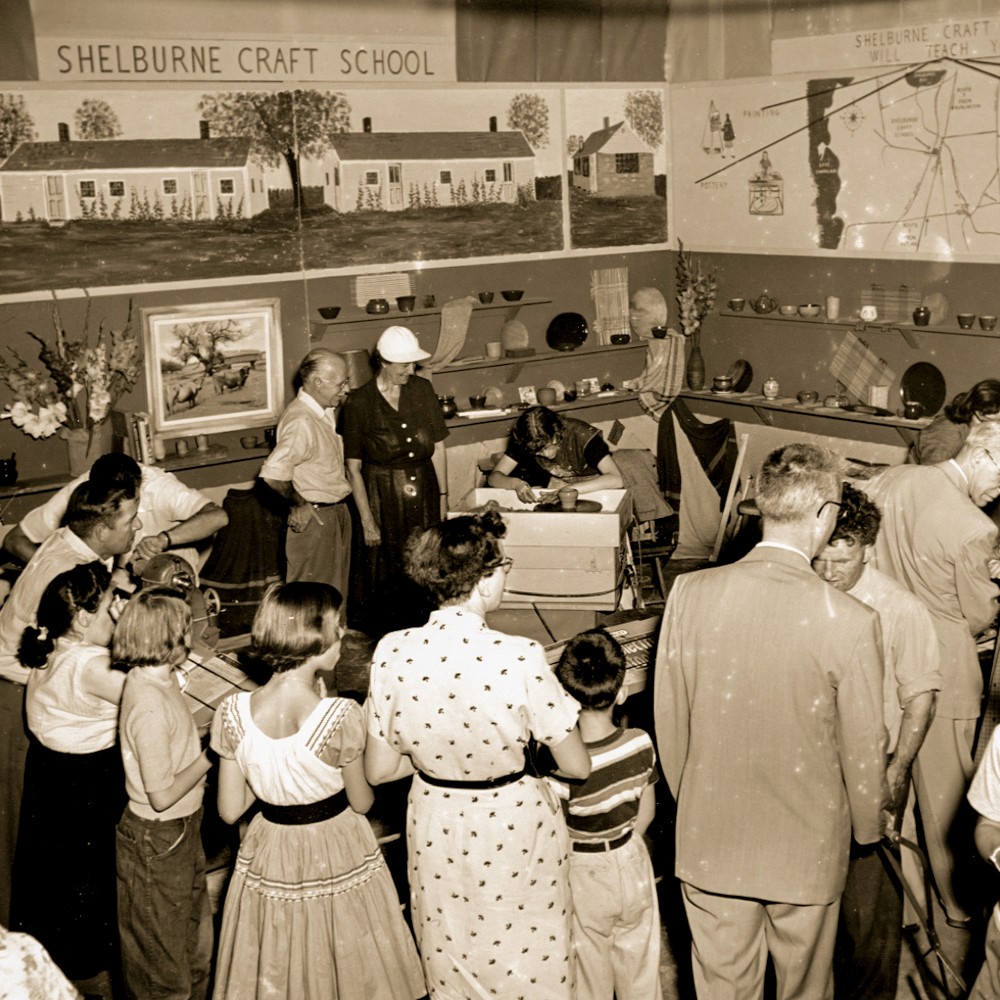
Pottery class
Weekly art classes are offered for 3rd to 6th graders. Betty Atwood is recruited by Aileen Webb to teach weaving, pottery, and more.
1951
Pottery class
Weekly art classes are offered for 3rd to 6th graders. Betty Atwood is recruited by Aileen Webb to teach weaving, pottery, and more.
1951
Pottery class
Weekly art classes are offered for 3rd to 6th graders. Betty Atwood is recruited by Aileen Webb to teach weaving, pottery, and more.
1953
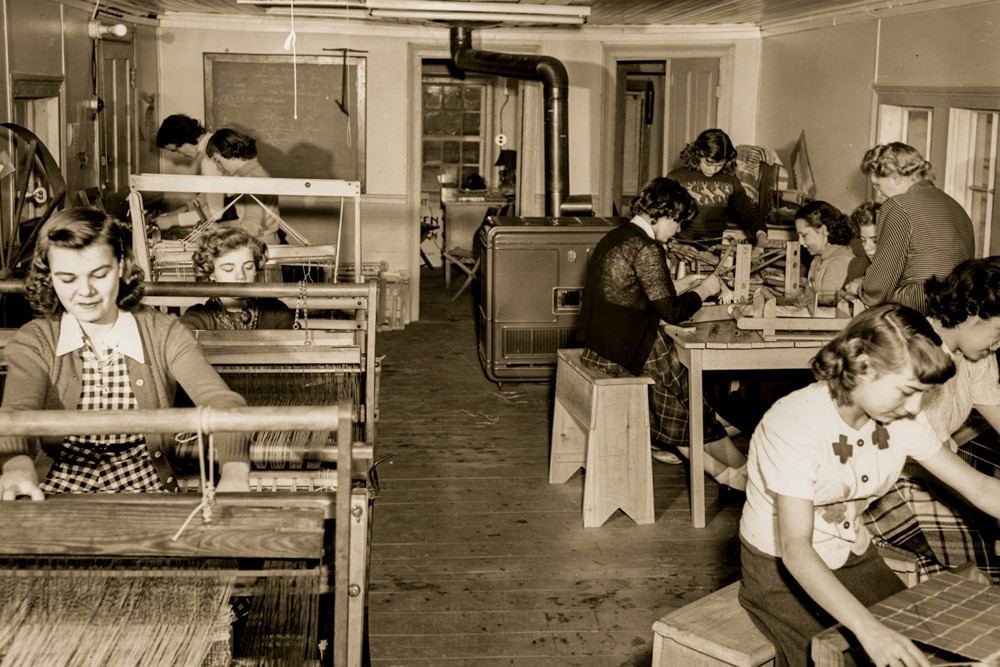
Weaving class
Sara Holbrook from the University of Vermont teaches weaving classes for 7th and 8th grade girls.
1953
Weaving class
Sara Holbrook from the University of Vermont teaches weaving classes for 7th and 8th grade girls.
1953
Weaving class
Sara Holbrook from the University of Vermont teaches weaving classes for 7th and 8th grade girls.
1954
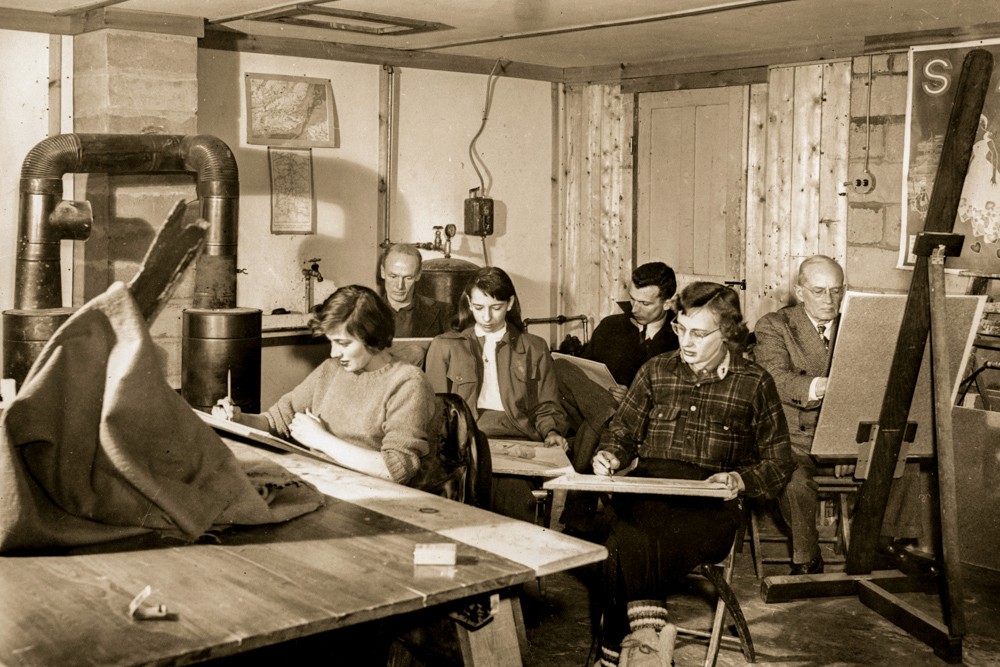
Drawing class
Stan Marc Wright teaches painting classes, and will become the Craft School’s longest serving teacher. An avid beachcomber, he has a large collection of shells. “The best artist is nature,” he says, “how can anyone improve on this shell?
1954
Drawing class
Stan Marc Wright teaches painting classes, and will become the Craft School’s longest serving teacher. An avid beachcomber, he has a large collection of shells. “The best artist is nature,” he says, “how can anyone improve on this shell?
1954
Drawing class
Stan Marc Wright teaches painting classes, and will become the Craft School’s longest serving teacher. An avid beachcomber, he has a large collection of shells. “The best artist is nature,” he says, “how can anyone improve on this shell?
1962
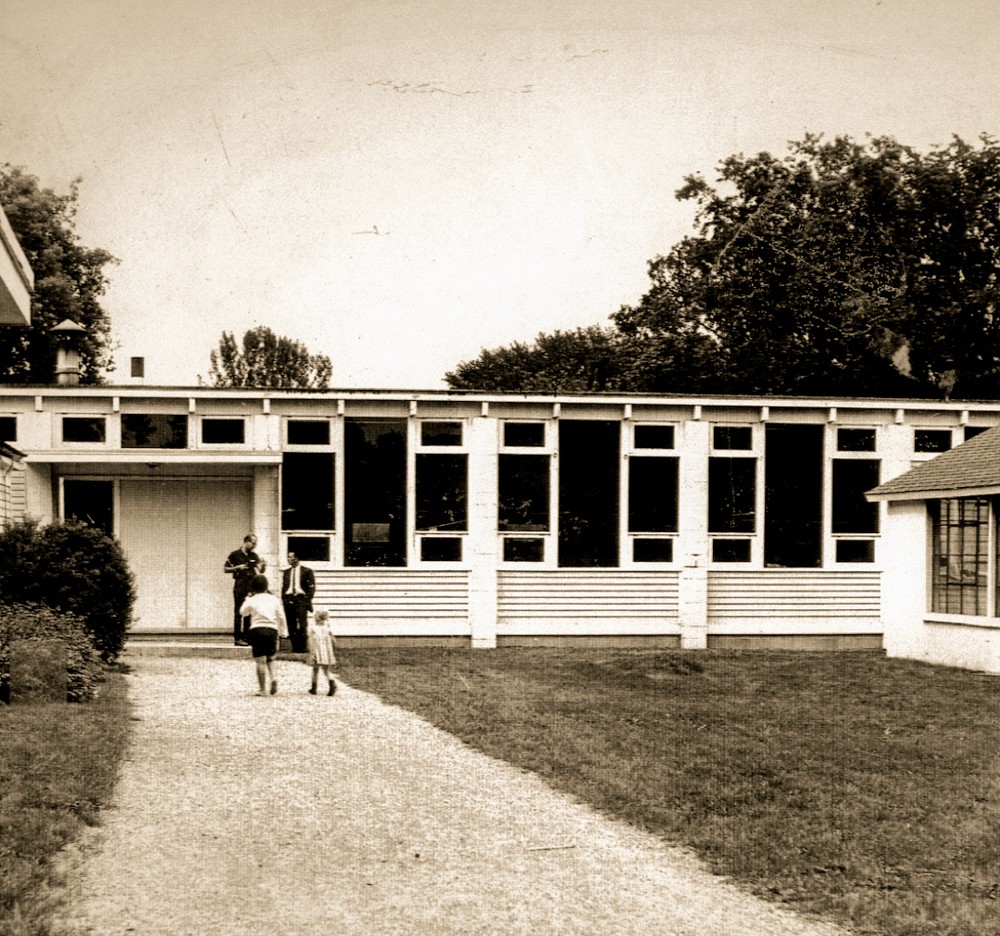
The new wood shop
The family of Lila Webb Wilmerding underwrites the construction of a new woodworking studio in her memory. A glass-windowed painting studio is also constructed between the two yellow bunkhouses, uniting them into a single building. This work is made possible through an outpouring of community support, including the money, labor, and skills of young and old alike.
1962
The new wood shop
The family of Lila Webb Wilmerding underwrites the construction of a new woodworking studio in her memory. A glass-windowed painting studio is also constructed between the two yellow bunkhouses, uniting them into a single building. This work is made possible through an outpouring of community support, including the money, labor, and skills of young and old alike.
1962
The new wood shop
The family of Lila Webb Wilmerding underwrites the construction of a new woodworking studio in her memory. A glass-windowed painting studio is also constructed between the two yellow bunkhouses, uniting them into a single building. This work is made possible through an outpouring of community support, including the money, labor, and skills of young and old alike.
1963
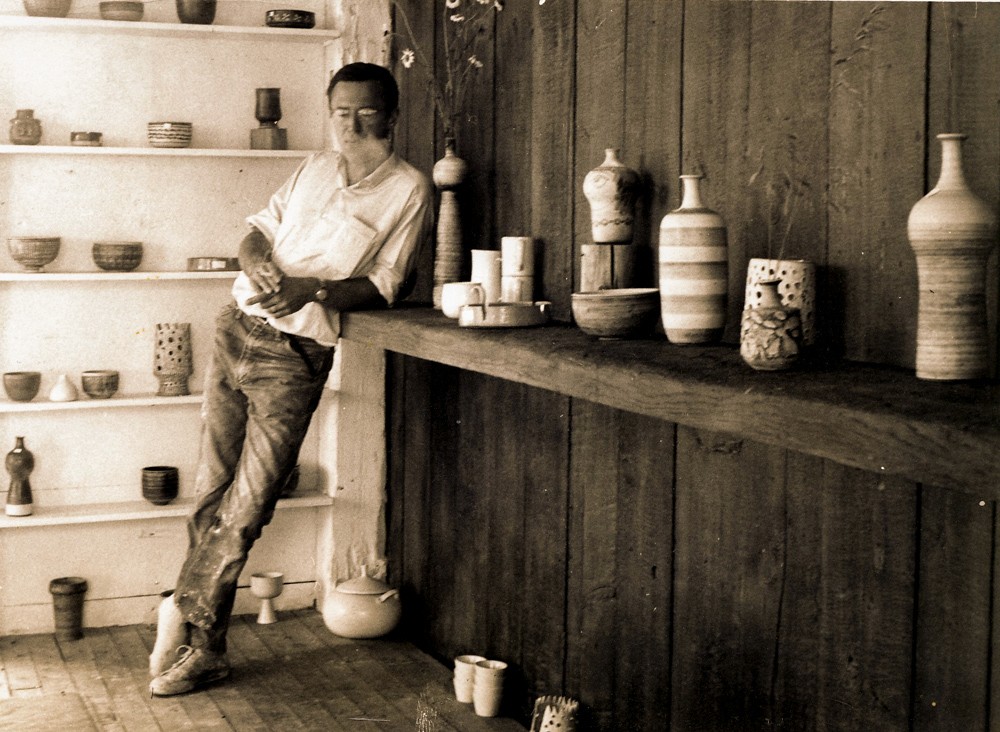
Frank Mann with his pottery
Shelburne Craft School teacher Frank Mann develops a line of pottery called Mann Stoneware, which sells throughout America, using special kinds of clay from all around the world. “I am a working man and this is dirty work,” he says in an interview.
1963
Frank Mann with his pottery
Shelburne Craft School teacher Frank Mann develops a line of pottery called Mann Stoneware, which sells throughout America, using special kinds of clay from all around the world. “I am a working man and this is dirty work,” he says in an interview.
1963
Frank Mann with his pottery
Shelburne Craft School teacher Frank Mann develops a line of pottery called Mann Stoneware, which sells throughout America, using special kinds of clay from all around the world. “I am a working man and this is dirty work,” he says in an interview.
1967

The Industrial Arts
Shelburne Middle School opens, leading the School District to endorse a new curriculum for Industrial Arts, including Woodworking, Planning, and Drafting. Shelburne Craft School’s campus is used to facilitate this curriculum, which continues to flourish for twenty years.
1967
The Industrial Arts
Shelburne Middle School opens, leading the School District to endorse a new curriculum for Industrial Arts, including Woodworking, Planning, and Drafting. Shelburne Craft School’s campus is used to facilitate this curriculum, which continues to flourish for twenty years.
1967
The Industrial Arts
Shelburne Middle School opens, leading the School District to endorse a new curriculum for Industrial Arts, including Woodworking, Planning, and Drafting. Shelburne Craft School’s campus is used to facilitate this curriculum, which continues to flourish for twenty years.
1975
Lyn Smith retires, and his son, Woody, takes over as director.
1975
Lyn Smith retires, and his son, Woody, takes over as director.
1975
Lyn Smith retires, and his son, Woody, takes over as director.
1985
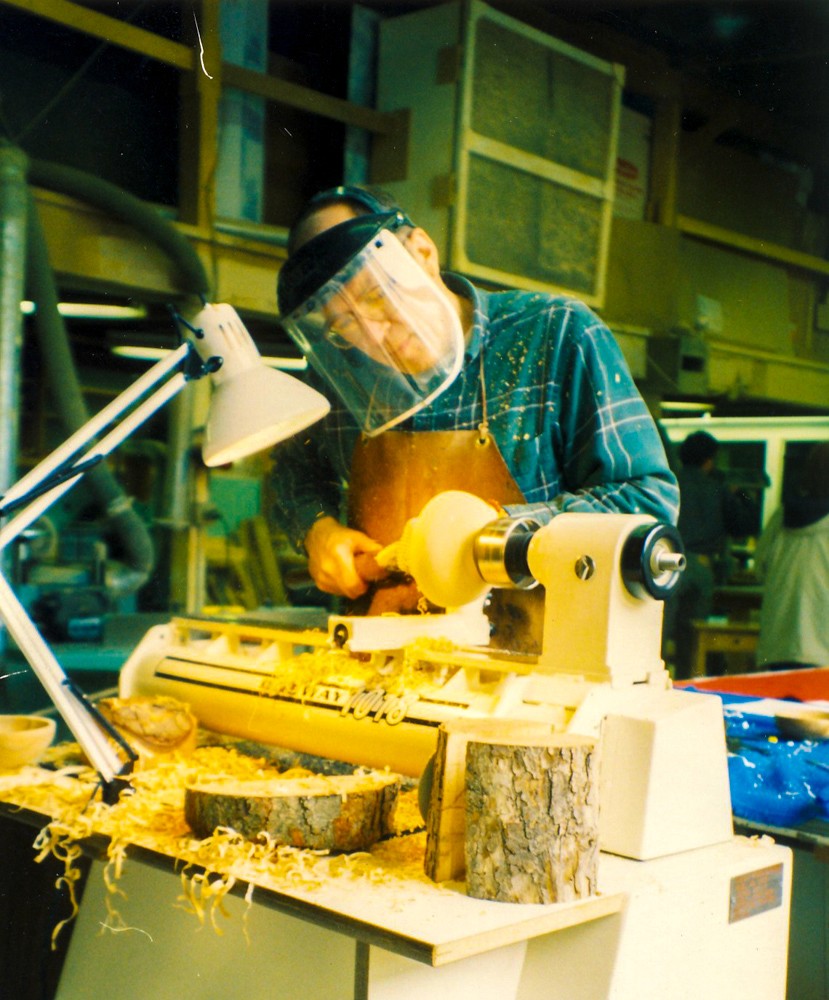
Woody at the lathe
Woody Smith retires as director.
1985
Woody at the lathe
Woody Smith retires as director.
1985
Woody at the lathe
Woody Smith retires as director.
1987
Shelburne Middle School creates its own in-house woodworking facilities, so the Industrial Arts program leaves Shelburne Craft School after twenty years.
1987
Shelburne Middle School creates its own in-house woodworking facilities, so the Industrial Arts program leaves Shelburne Craft School after twenty years.
1987
Shelburne Middle School creates its own in-house woodworking facilities, so the Industrial Arts program leaves Shelburne Craft School after twenty years.
1988

Branding the school
A group of former students form a Board of Directors to help revitalize the Craft School. They hire Elizabeth Billings as Executive Director, who serves until 1992.
1988
Branding the school
A group of former students form a Board of Directors to help revitalize the Craft School. They hire Elizabeth Billings as Executive Director, who serves until 1992.
1988
Branding the school
A group of former students form a Board of Directors to help revitalize the Craft School. They hire Elizabeth Billings as Executive Director, who serves until 1992.
1991
Lyn Smith, founder of Shelburne Craft School, passes away on August 31st.
1991
Lyn Smith, founder of Shelburne Craft School, passes away on August 31st.
1991
Lyn Smith, founder of Shelburne Craft School, passes away on August 31st.
1993
Shelburne Craft School partners with Trinity College to offer a Bachelor’s Degree in Arts Entrepreneurship. Collaborations begin with St. Michael’s College and Burlington College for graduate and undergraduate credit.
1993
Shelburne Craft School partners with Trinity College to offer a Bachelor’s Degree in Arts Entrepreneurship. Collaborations begin with St. Michael’s College and Burlington College for graduate and undergraduate credit.
1993
Shelburne Craft School partners with Trinity College to offer a Bachelor’s Degree in Arts Entrepreneurship. Collaborations begin with St. Michael’s College and Burlington College for graduate and undergraduate credit.
1995

Rebranding, 1995
Shelburne Craft School celebrates its 50th anniversary with a gala dinner and benefit auction at Shelburne Farms.
1995
Rebranding, 1995
Shelburne Craft School celebrates its 50th anniversary with a gala dinner and benefit auction at Shelburne Farms.
1995
Rebranding, 1995
Shelburne Craft School celebrates its 50th anniversary with a gala dinner and benefit auction at Shelburne Farms.
2002
Judy Raven is appointed Executive Director.
2002
Judy Raven is appointed Executive Director.
2002
Judy Raven is appointed Executive Director.
2004
A grant from the Lintilac Foundation allows Shelburne Craft School to re-initiate its historic partnership with Shelburne Community School, helping to satisfy the State of Vermont’s Technical Education requirements, while offering a unique opportunity for the children of Shelburne.
2004
A grant from the Lintilac Foundation allows Shelburne Craft School to re-initiate its historic partnership with Shelburne Community School, helping to satisfy the State of Vermont’s Technical Education requirements, while offering a unique opportunity for the children of Shelburne.
2004
A grant from the Lintilac Foundation allows Shelburne Craft School to re-initiate its historic partnership with Shelburne Community School, helping to satisfy the State of Vermont’s Technical Education requirements, while offering a unique opportunity for the children of Shelburne.
2005

A new direction
Shelburne Craft School is rebranded “Shelburne Art Center.”
2005
A new direction
Shelburne Craft School is rebranded “Shelburne Art Center.”
2005
A new direction
Shelburne Craft School is rebranded “Shelburne Art Center.”
2007

On the village green
Shelburne Art Center opens the “Gallery on the Green” in the former Pierson Library building in the center of Shelburne. The new space exhibits work by local, national, and international artists and artisans. Administrative offices leave 64 Harbor Road and move to this building.
2007
On the village green
Shelburne Art Center opens the “Gallery on the Green” in the former Pierson Library building in the center of Shelburne. The new space exhibits work by local, national, and international artists and artisans. Administrative offices leave 64 Harbor Road and move to this building.
2007
On the village green
Shelburne Art Center opens the “Gallery on the Green” in the former Pierson Library building in the center of Shelburne. The new space exhibits work by local, national, and international artists and artisans. Administrative offices leave 64 Harbor Road and move to this building.
2009
Responding to an economic downturn, Shelburne Art Center returns to its original location at 64 Harbor Road.
2009
Responding to an economic downturn, Shelburne Art Center returns to its original location at 64 Harbor Road.
2009
Responding to an economic downturn, Shelburne Art Center returns to its original location at 64 Harbor Road.
2010
Sage Tucker-Ketcham, a painter, is appointed Executive Director.
2010
Sage Tucker-Ketcham, a painter, is appointed Executive Director.
2010
Sage Tucker-Ketcham, a painter, is appointed Executive Director.
2011
Back to our roots
Shelburne Art Center launches a “Returning to Our Roots” campaign, restoring its original name, Shelburne Craft School. Bob Jordan redesigns our logo, hearkening back to an early 1950s-era design.
2011
Back to our roots
Shelburne Art Center launches a “Returning to Our Roots” campaign, restoring its original name, Shelburne Craft School. Bob Jordan redesigns our logo, hearkening back to an early 1950s-era design.
2011
Back to our roots
Shelburne Art Center launches a “Returning to Our Roots” campaign, restoring its original name, Shelburne Craft School. Bob Jordan redesigns our logo, hearkening back to an early 1950s-era design.
2015
Shelburne Craft School celebrates its 70th anniversary, and receives the State of Vermont’s designation as a “Vermont Craft Center” for excellence in Craft Education.
2015
Shelburne Craft School celebrates its 70th anniversary, and receives the State of Vermont’s designation as a “Vermont Craft Center” for excellence in Craft Education.
2015
Shelburne Craft School celebrates its 70th anniversary, and receives the State of Vermont’s designation as a “Vermont Craft Center” for excellence in Craft Education.
2016
Partnerships continue with the local education community, including Burlington College, Vermont Woodworking School, Shelburne Community School, Lake Champlain Waldorf School, Shelburne Farms, and more.
2016
Partnerships continue with the local education community, including Burlington College, Vermont Woodworking School, Shelburne Community School, Lake Champlain Waldorf School, Shelburne Farms, and more.
2016
Partnerships continue with the local education community, including Burlington College, Vermont Woodworking School, Shelburne Community School, Lake Champlain Waldorf School, Shelburne Farms, and more.
2017
Programs are thriving in five core disciplines: clay, wood, metal, glass, and visual arts.
2017
Programs are thriving in five core disciplines: clay, wood, metal, glass, and visual arts.
2017
Programs are thriving in five core disciplines: clay, wood, metal, glass, and visual arts.
2018
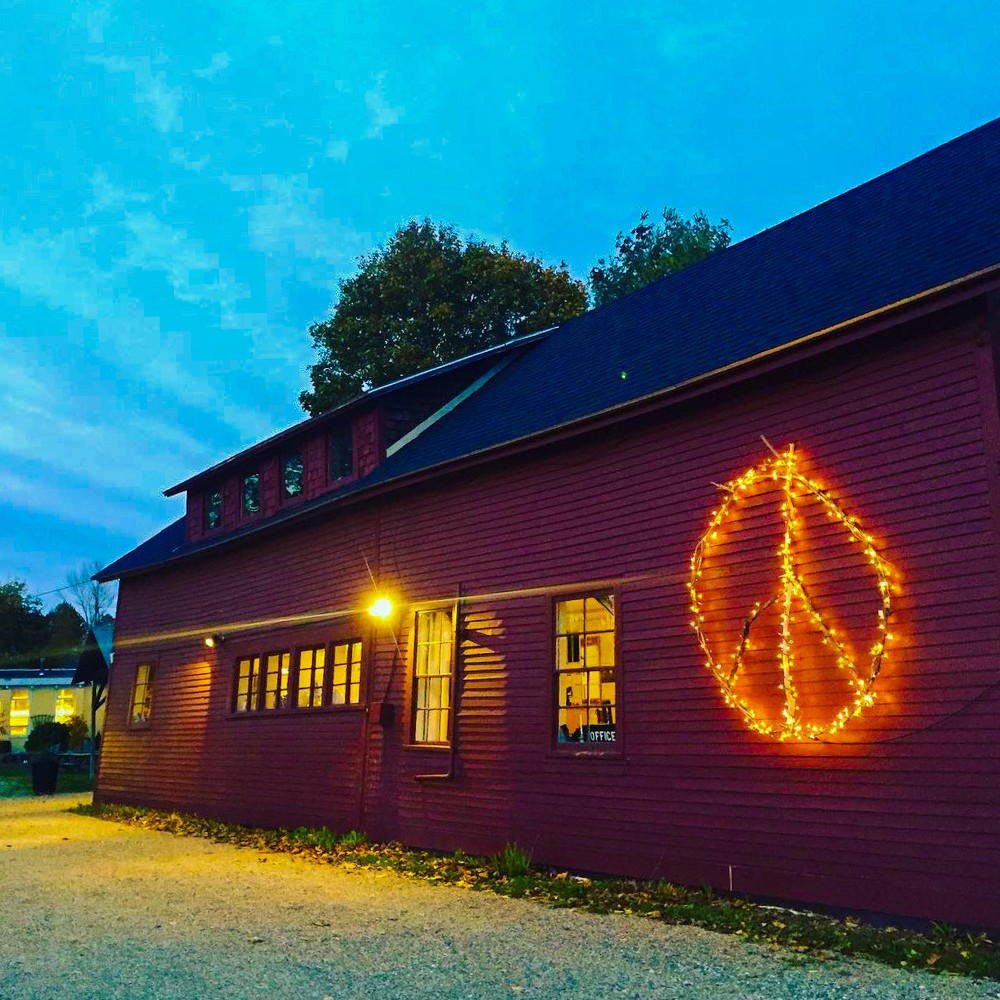
A place of peace
Working with board member Jonathan Harris, Shelburne Craft School launches a new website.
2018
A place of peace
Working with board member Jonathan Harris, Shelburne Craft School launches a new website.
2018
A place of peace
Working with board member Jonathan Harris, Shelburne Craft School launches a new website.
"Education is a process of opening doors and keeping them open.”
As Lyn Smith would often say. We are grateful to the countless crafters and community members whose passion and support have kept open these doors for all of these years—helping Shelburne Craft School evolve into the dynamic and beloved organization that it is today.
Support this mission
Shelburne Craft School is a 501(c)(3) nonprofit organization.